

Vulcanization process of natural rubber
 Natural plastic latex glove manufacturing is an interesting process that starts with nature and ends with comprehensive buffer security. Each step of the process along the way guarantees the gloves tend to be of maximum high quality when they arrive to distributors and end users. Listed here is a synopsis of the manufacturing pattern from beginning to end. Exactly how exudate gloves are designed:
The harvesting phase
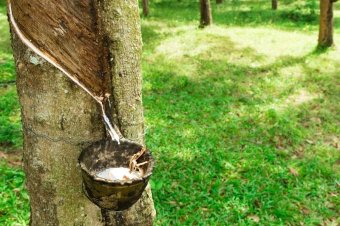
The process begins with the Hevea brasiliensis tree, which mostly expands in Southeast Asian countries like Vietnam, Thailand and Indonesia. Farmers draw out the woods’ milky white exudate sap from mature woods through an ongoing process known as tapping. This does occur in the early early morning, while the sap coagulates quicker when temperatures rise later on in the time. Farmers start with stripping bark from the tree at a downward curve. This directs the sap to a spile, which in turn allows the exudate to drip into a cup affixed into the tree. Then, farmers boil the milky white latex making it more concentrated, which provides the sap a consistency similar to syrup. Rubber trees tend to be suitable for tapping for 5 years.
“Farmers remove latex from trees through a process known as tapping.”
Manufacturing period
When farmers gather the sap, it goes to a factory for manufacturing. This period includes a few tips:
- Preparing the exudate: While latex gloves result from normal rubberized latex, they're not 100 percent pure. It is because producers incorporate the latex focus with many compounding chemical substances during preliminary step of production process. This step enhances the latex’s properties, for instance the elasticity, in addition to stabilizes the material and its particular rack life.
- Cleaning the formers: To mold the latex in to the form of a glove, producers utilize hand-shaped ceramic formers. The initial task is to wash these formers by dipping all of them in water after which bleach. This guarantees no residues tend to be left through the previous batch. Afterwards, formers plunge into a chemical answer of calcium carbonate and calcium nitrate to help the latex stick.
- Dipping in exudate: when the formers are ready, manufacturers dip them into a tank filled with latex, using amount of time the previous is immersed into the tank varying based on the desired glove width.
- Vulcanizing the plastic: so that the rubberized cannot break while drying out, the formers enter an oven to dried out and solidify. The introduction of the vulcanization procedure was built-in to your development of the exudate rubberized.
- Leaching the gloves: this technique involves dipping the gloves in liquid tanks and removing excess exudate proteins to reduce the possibility of wearers having an allergic reaction and improve the experience.
- Beading the cuffs: when the gloves tend to be finished with leaching, the makers roll the cuffs to make the gloves more straightforward to pull. The gloves may undergo leaching once more after beading.
- Applying powder: In the event that gloves are powdered, they enter a damp food-grade cornstarch powder slurry. Later, makers dry the gloves again.
- Chlorinating or polymer coating the gloves: In the event that gloves tend to be powder free, they undergo alternative processes to facilitate easier donning. The first is chlorination, which makes the latex less tacky. The second requires covering the gloves with a polymer, making the outer lining smoother.
- Stripping the gloves: after the gloves are completed, employees take them of through the formers manually.
Share this article
FAQ

What type of shoe is worth the money and comfortability more, Vans or Sperrys? - Quora
You are the only one that can answer this as you alone know your taste, feet, their comfort and your wallet with its comfort. Only you know what feels best.
Personally, I would not give more than $5 for either brand. I find both brands to be overpriced, poor fitting and very unsupportive. Yet my kids love them. There is some value in a deck shoe for people on a deck.
I have some Top-siders I got for $3 on the secondary market, just in case I am ever on deck.
Related Posts
Latest Posts


