

Vulcanization makes rubber
 Advertisement
Think of rubberized and also you probably think about elastic bands, car tires, or pen erasers. But this super-stretchy product really discovers its method into thousands of different items—everything from rubberized stamps and waterproof shoes to searching wetsuits, cycling hats, and dish washer hoses. Rubber, that has been popular for over 1000 years, once arrived completely from natural resources; now rubber products are just as likely to be made artificially in chemical plants. Which is mainly because we cannot create enough natural plastic to meet our requirements. Hence, in turn, is really because plastic is really fantastically helpful. Why don't we just take a closer look at among the world's many amazing products!
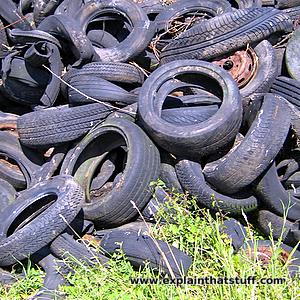
Photo: half the whole world's rubberized is used which will make car tires—and about half of all of them tend to be wasted in landfills, burned in incinerators, or elsewhere dumped.
Understanding rubberized?
When individuals discuss "rubber", they don't usually specify what kind. There are plenty of kinds of rubber, nevertheless they all fall into two broad kinds: normal plastic (latex—grown from plants) and synthetic rubberized (made artificially in a chemical plant or laboratory). Commercially, the most important synthetic rubbers are styrene butadiene (SBR), polyacrylics, and polyvinyl acetate (PVA); various other types feature polyvinyl chloride (PVC), polychloroprene (better known as neoprene), as well as other forms of polyurethane. Although all-natural rubber and artificial rubbers tend to be comparable in a few means, they truly are created by entirely various processes and chemically quite different.
Natural rubber
Natural rubber is made from a runny, milky white liquid labeled as latex that oozes from specific flowers when you slashed into all of them. (Common dandelions, for example, create latex; if you snap off their particular stems, you can view the latex dripping out from all of them. In theory, there is no reason why we're able ton't make rubber by developing dandelions, though we'd need a lot of them.) Although there are something similar to 200 plants in the field that produce latex, over 99 percent of the world's all-natural plastic is made from the latex that comes from a tree species called Hevea brasiliensis, widely known while the plastic tree.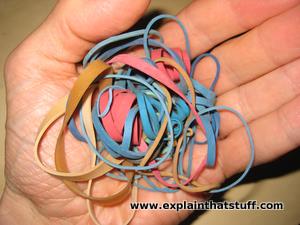 This latex is all about one third liquid and one third rubberized particles held in a form generally a colloidal suspension system. Natural rubberized is a polymer of isoprene (also called 2-methylbuta-1, 3-diene) with the chemical formula (C5H8)n. To put it more merely, it really is made from many thousands of fundamental C5H8 products (the monomer of isoprene) loosely joined up with to make long, tangled stores. These stores of molecules can be pulled apart and untangled fairly easily, but they spring back together if you release them—and that is what tends to make rubberized flexible.
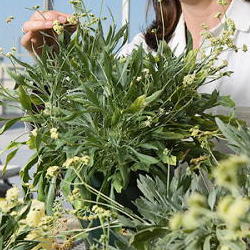
Photo: remaining: Rubber bands are a tremendously familiar daily utilization of latex rubberized. Right: Guayule: one of many flowers that rubberized is made. Photo by Peggy Greb courtesy of US division of Agriculture/Agricultural Research Service (USDA/ARS).
Artificial rubbers
Artificial rubbers are formulated in chemical plants using petrochemicals as their kick off point. One of the first (whilst still being among the best understood) is neoprene (the manufacturer for polychloroprene), made by reacting together acetylene and hydrochloric acid. Emulsion styrene-butadiene plastic (E-SBR), another synthetic rubberized, is trusted in making car tires.
 For the rest of this article, we will concentrate mostly on normal plastic.
Exactly how is rubber made?
It can take a number of quite distinct steps to make something from normal rubberized. First, you must gather your latex through the plastic trees using a traditional process called rubber tapping. That requires making a broad, V-shaped cut in the tree's bark. Since the latex drips away, it is gathered in a cup. The latex from many woods is then blocked, washed, and reacted with acid to really make the particles of plastic coagulate (stick together). The rubber made because of this is pressed into slabs or sheets then dried, prepared for the next stages of manufacturing.
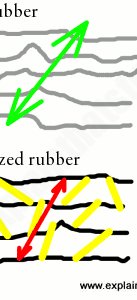
On it's own, unprocessed rubber is not all that helpful. It is often brittle when cool and smelly and gluey with regards to warms up. Additional processes are accustomed to transform it into a much more flexible material. The first you're called mastication (a word we usually use to describe how pets chew meals). Masticating machines "chew up" raw plastic utilizing technical rollers and presses to really make it gentler, more straightforward to work, plus sticky. Following the plastic has-been masticated, additional substance components are blended in to improve its properties (as an example, making it more hardwearing). After that, the rubber is squashed into form by rollers (an ongoing process called calendering) or squeezed through specifically formed holes to create hollow pipes (a procedure called extrusion). Finally, the rubber is vulcanized (cooked): sulfur is included additionally the rubber is heated to about 140°C (280°F).
Photo: In 1939, United states inventor Charles Goodyear (1800–1860) created the vulcanization (heat-treatment) procedure that makes rubber more difficult and much more durable. He would invested a long time as a struggling creator, attempting desperately to turn plastic into a helpful item, when he accidentally dropped some plastic on a hot kitchen stove and viewed it "prepare" it self into a more of use kind: the black, vulcanized product many of us understand as rubberized to this day. Despite establishing perhaps one of the most useful materials ever, Goodyear never ever made much money from his creation and died deeply with debt. Luckily, their name life on inside Goodyear tire company—and his superb share to materials technology never already been forgotten. Picture courtesy of United States Library of Congress.
Share this article
Related Posts

Latest Posts


